HissenIT
IT Security Awareness News Roundup for September 2026
Added at 09/01/2026, last update at 09/30/2026
What matters most this month in IT security and awareness, and what should guide the attention of CIOs, CISOs, and CEOs?
General IT Security Awareness Content
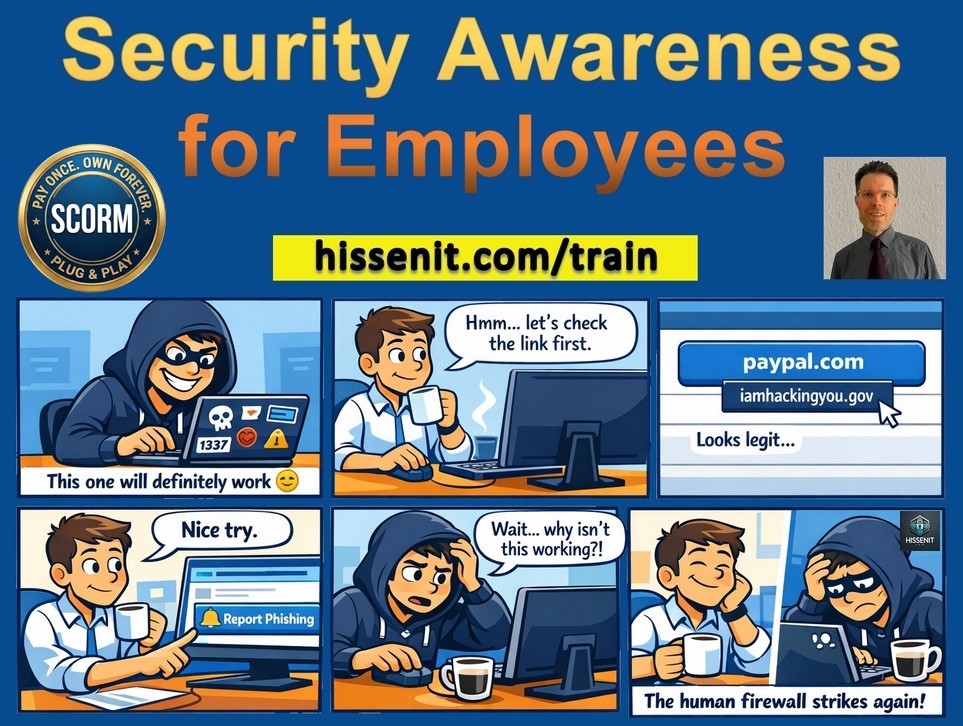
The weakest link in your security chain isn't your software
It's the employee who hasn't been trained properly. You can fix that:

IT Security Audits following ISO27001/27002 through LMS
How do you deal with IT Security Audits regarding Employee Security Awareness within your organization? In case you are using a Learning Management System (LMS), you might be able to rely on strong reporting:

IT Security Awareness Failures
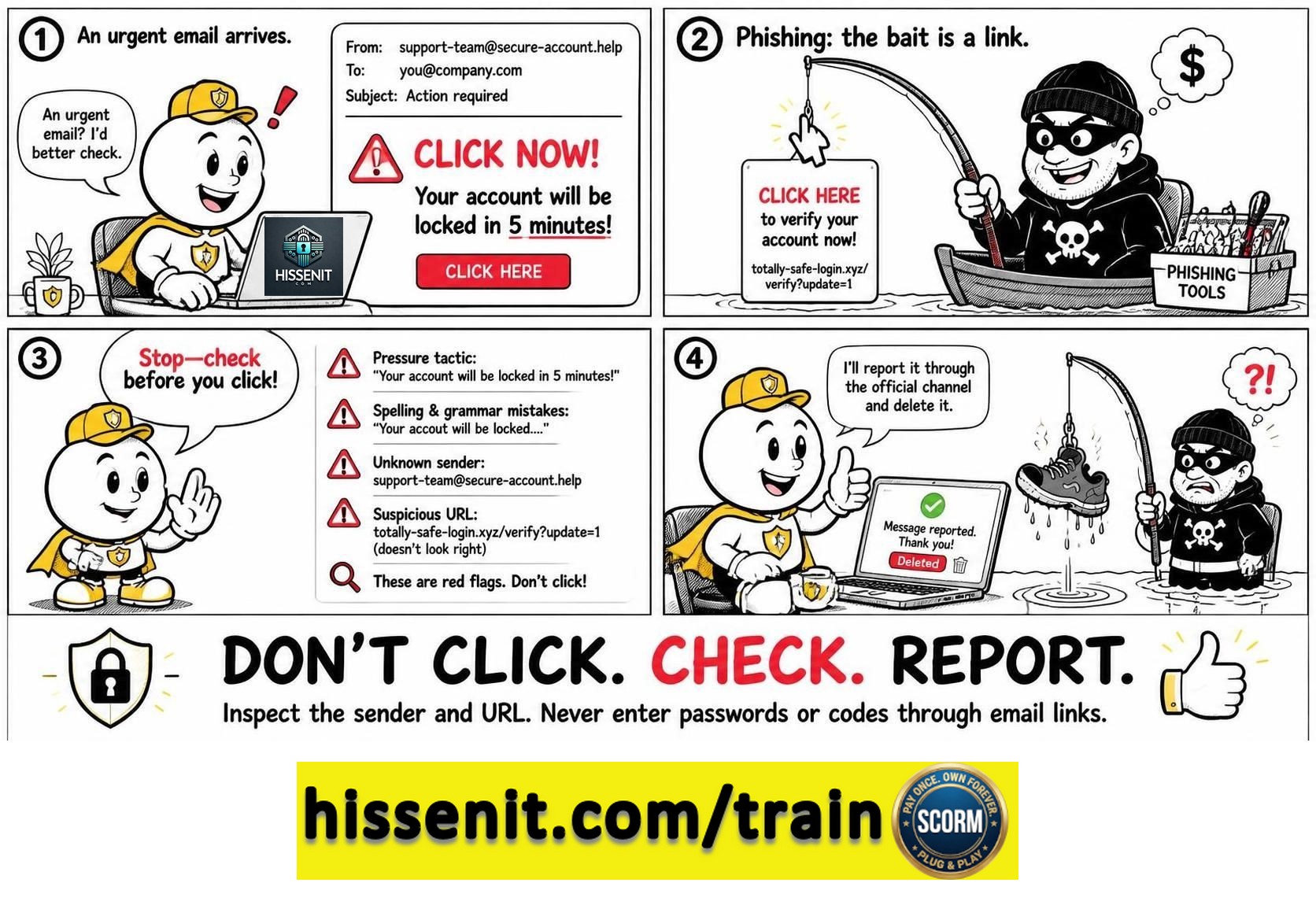
Major Phishing Campaigns Target Microsoft 365, Voicemail Users and ChatGPT Accounts
Recent phishing campaigns show how attackers are increasingly abusing trusted brands, familiar business workflows, and legitimate authentication mechanisms to steal credentials and compromise accounts. Microsoft’s disruption of EvilTokens revealed more than 12,000 compromised inboxes across over 10,000 organizations worldwide, with the platform using AI and device-code phishing to automate account compromise and subsequent fraud. Check Point also identified more than 58,000 fake voicemail-transcript e-mails targeting over 7,800 organizations, using malicious SVG attachments to redirect victims to credential-harvesting pages. Meanwhile, Cofense documented a ChatGPT-themed phishing campaign capable of sending up to 100,000 e-mails in a single day, using fake billing notifications to steal OpenAI credentials and payment information. (09/25/2026)
Phishers Turn Google's Own Infrastructure Into a Trust Proxy
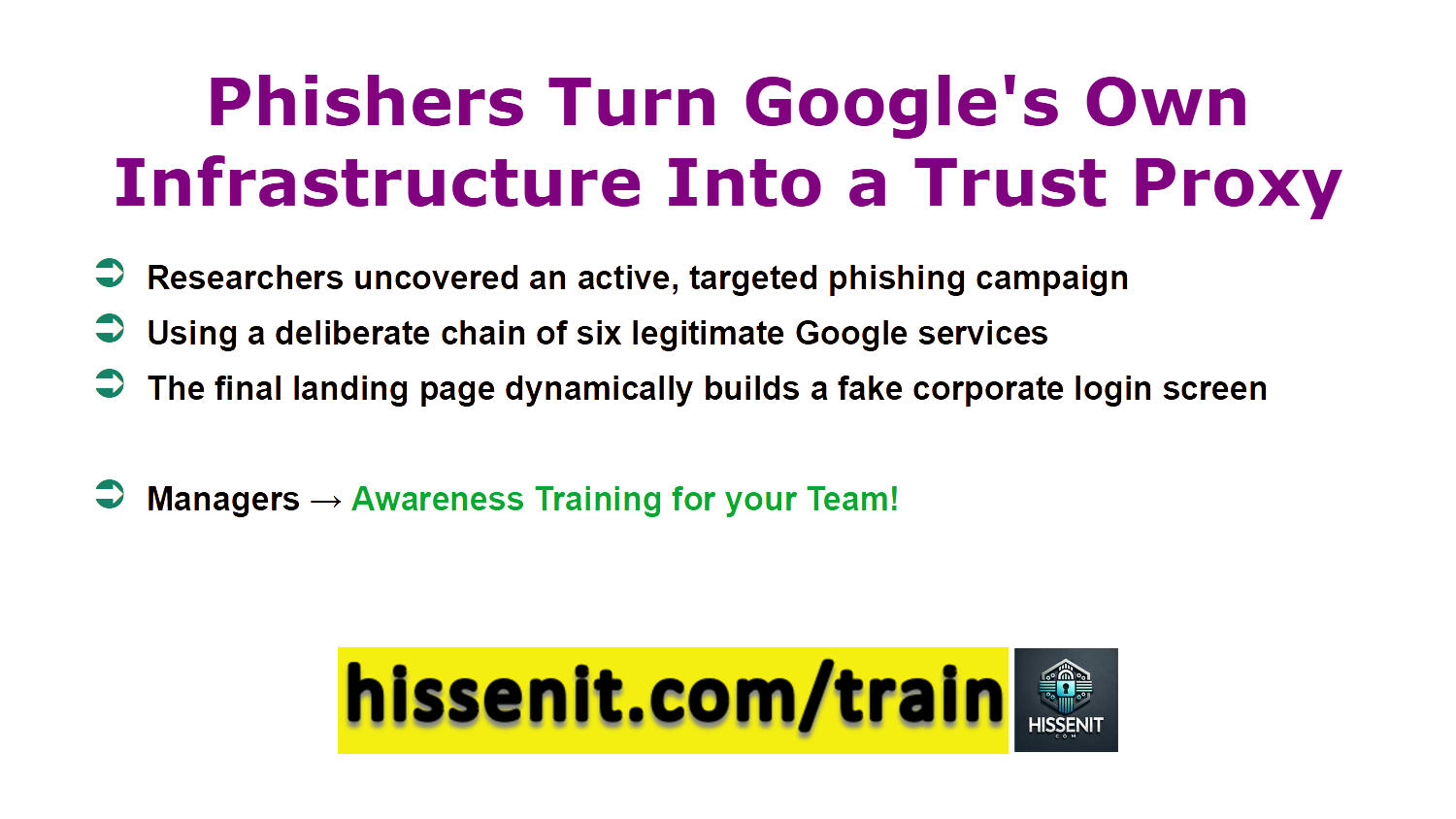
Researchers uncovered an active, targeted phishing campaign that routes victims through a deliberate chain of six legitimate Google services - including Meet, DoubleClick, Custom Search, Image Search, Tag Manager, and Analytics - before landing them on a credential-harvesting page or silently installing the ScreenConnect remote access tool. By the time a defender inspects the sending domain, the embedded link, or the intermediate hops, everything still looks clean, because security gateways see only trusted Google domains at every step. The landing page dynamically builds a fake corporate login screen using the victim's own e-mail address, pulls a live screenshot of their company website, and exfiltrates stolen credentials to a Telegram bot within seconds. (09/16/2026)
Microsoft/Malwarebytes/HackerNews: Fake CAPTCHA Turns Users into Their Own Attackers
Cybercriminals are using compromised websites and fake Cloudflare CAPTCHA prompts to trick users into copying and executing malicious PowerShell commands on their own Windows systems. The TerminalFix campaign then deploys a multi-stage payload that performs Active Directory reconnaissance and establishes a reverse tunnel, potentially giving attackers access to other systems inside the corporate network. (09/03/2026)
Secure Programming / Coding Failures
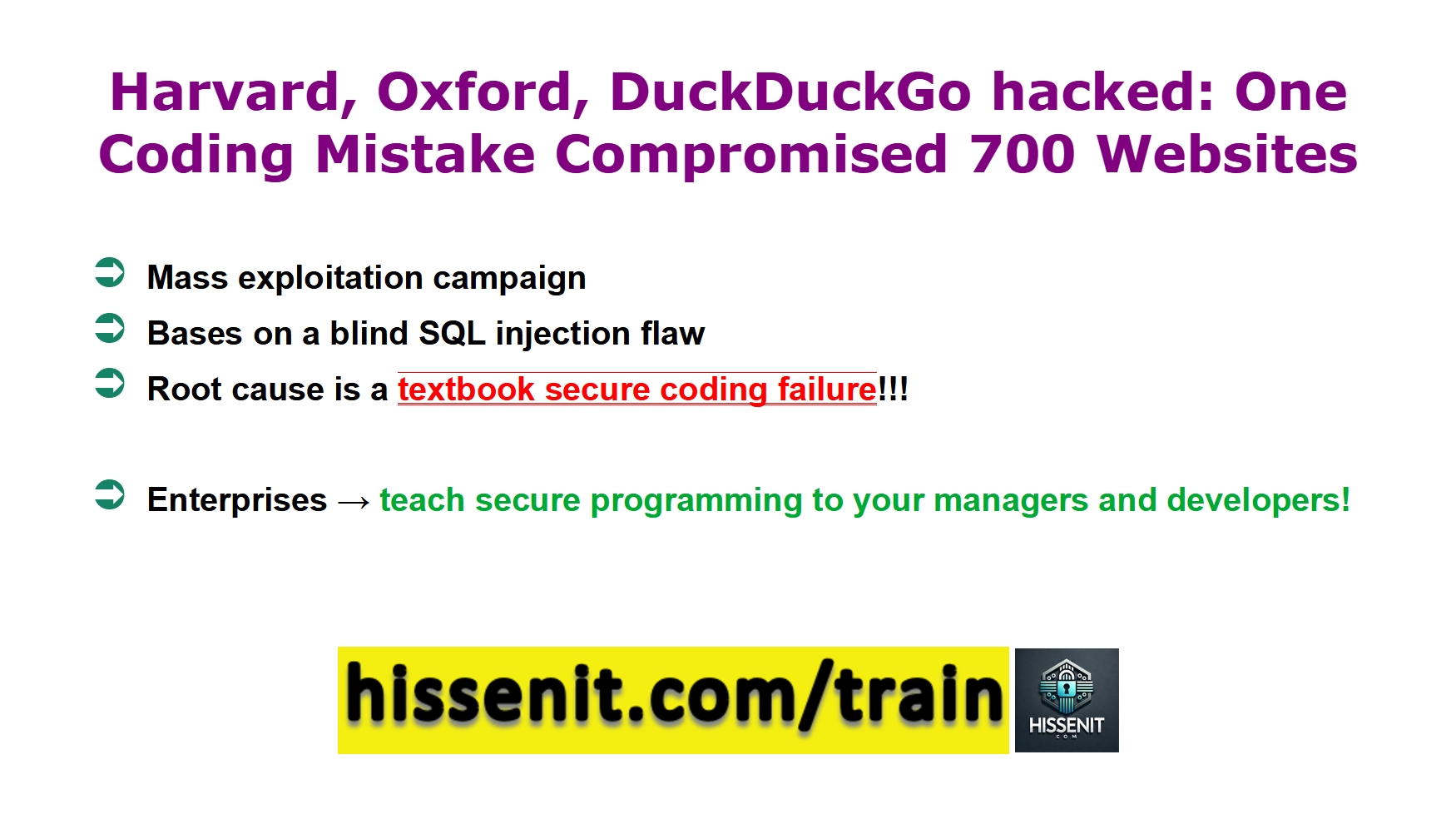
Harvard, Oxford, DuckDuckGo Hacked: One Coding Mistake Compromised 700 Websites
A mass exploitation campaign targeting CVE-2026-26980, a critical blind SQL injection flaw in Ghost CMS's Content API, has compromised over 700 websites - including the blogs of Harvard University, Oxford University, and DuckDuckGo - by allowing unauthenticated attackers to extract admin API keys from the database. The root cause is a textbook secure coding failure: user-supplied values were concatenated directly into raw SQL statements with no sanitization or parameterized query binding. (09/22/2026)
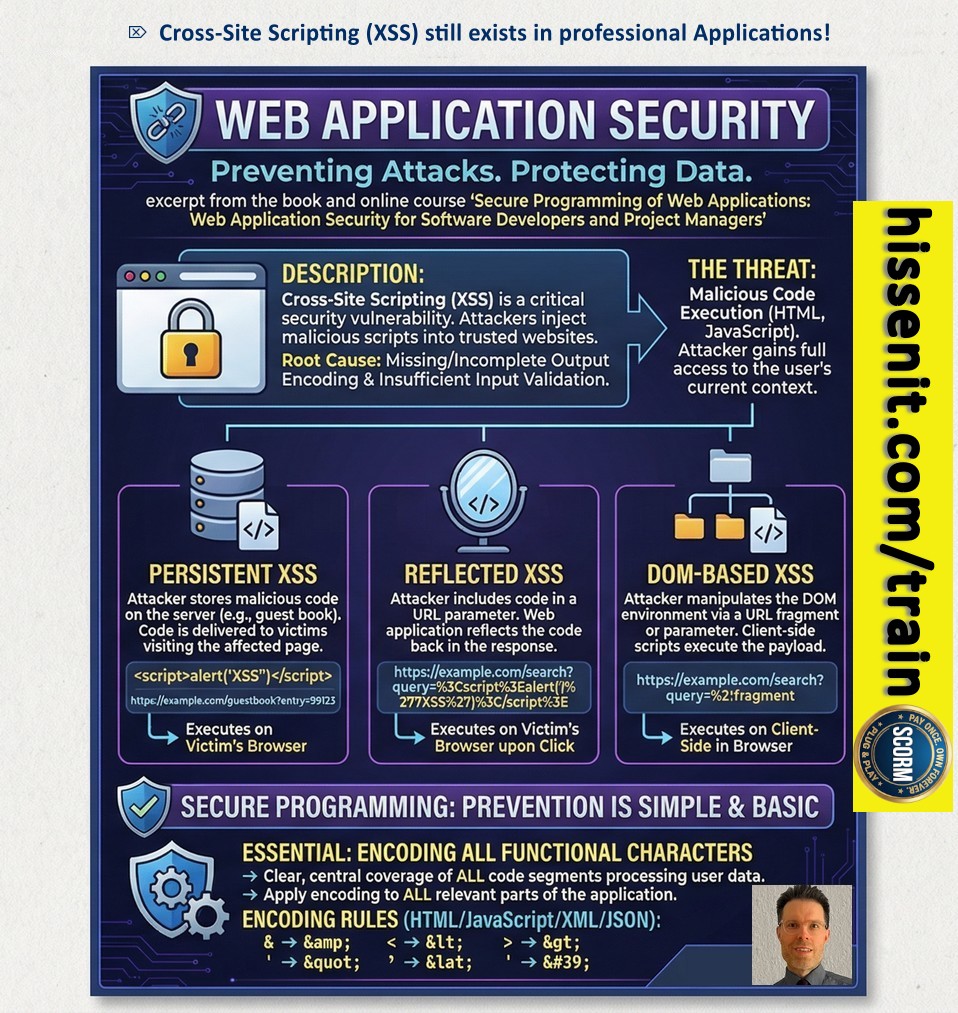
Cross-Site Scripting (XSS) still exists in professional Applications!
- XSS2Shell WordPress XSS Vulnerability (08/2026)
- MS Exchange Server XSS Vulnerability (06/2026)
- Stored Cross-Site Scripting (XSS) Vulnerabilities in VMware Products (06/2026)
- ...
What about your in-house development? Security in custom-made software – do you rely solely on frameworks? Is Secure Programming background knowledge important to your team and project managers:
A quick update from us
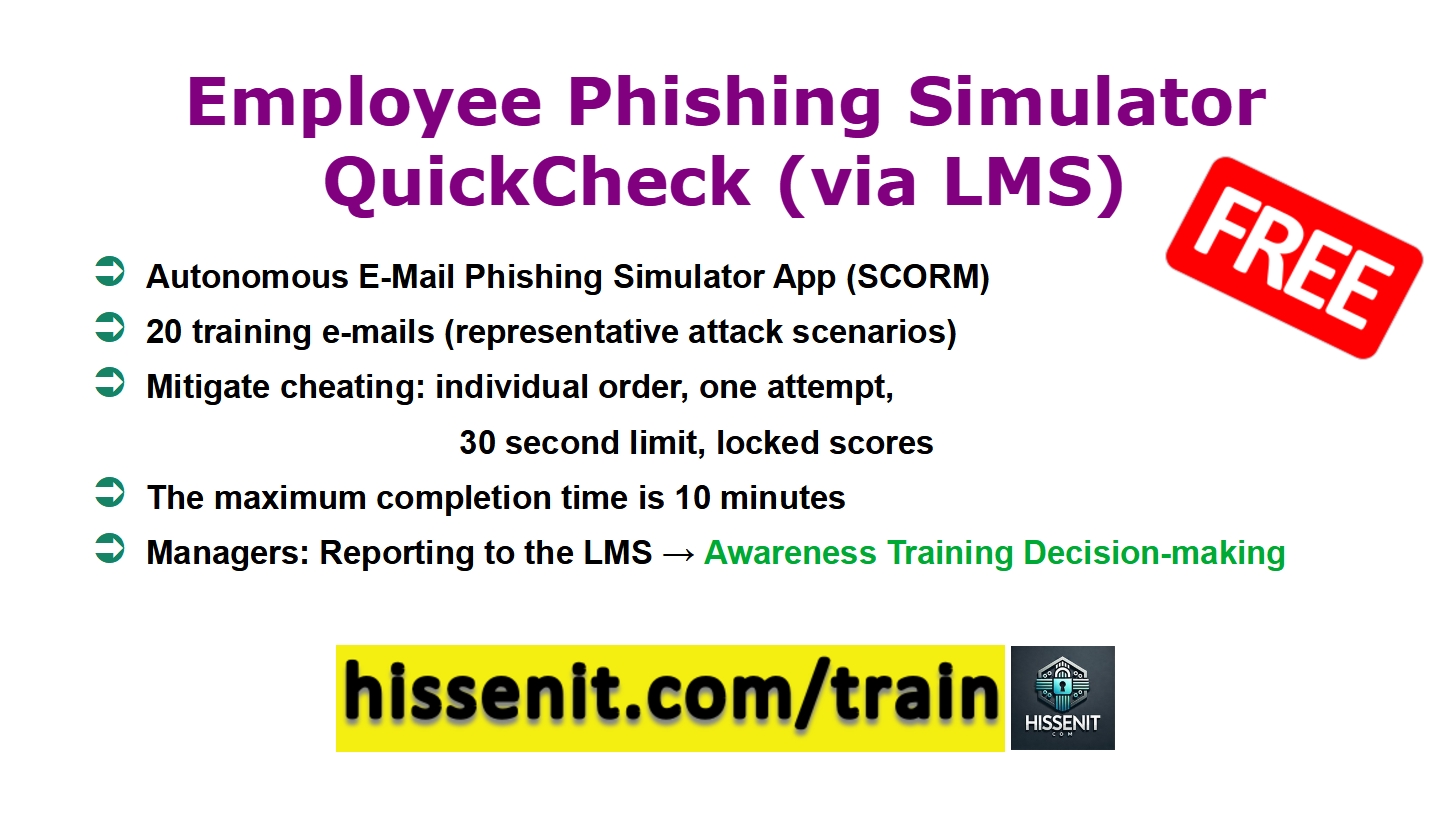
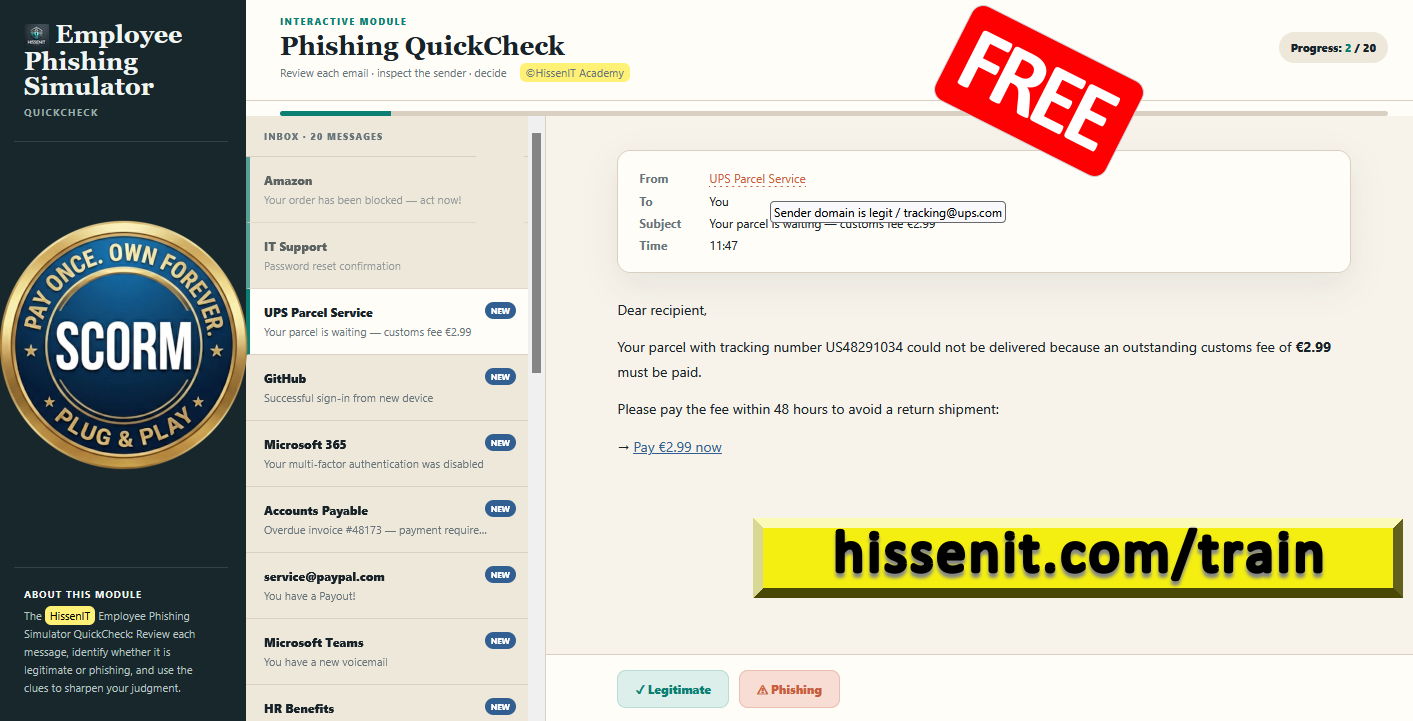
New free Employee Phishing Simulator QuickCheck as SCORM module
In this free E-Mail Phishing Simulator, Employees shall review each message, identify whether it is legitimate or phishing, and use the clues to sharpen their judgment. LMS reporting gives managers valuable insights into how their employees respond to common and sometimes deceptive phishing e-mails, helping identify potential gaps in security awareness and areas...